The illegal wildlife trade causes serious harm to the environment and endangered species. A unified global response is needed to combat it.
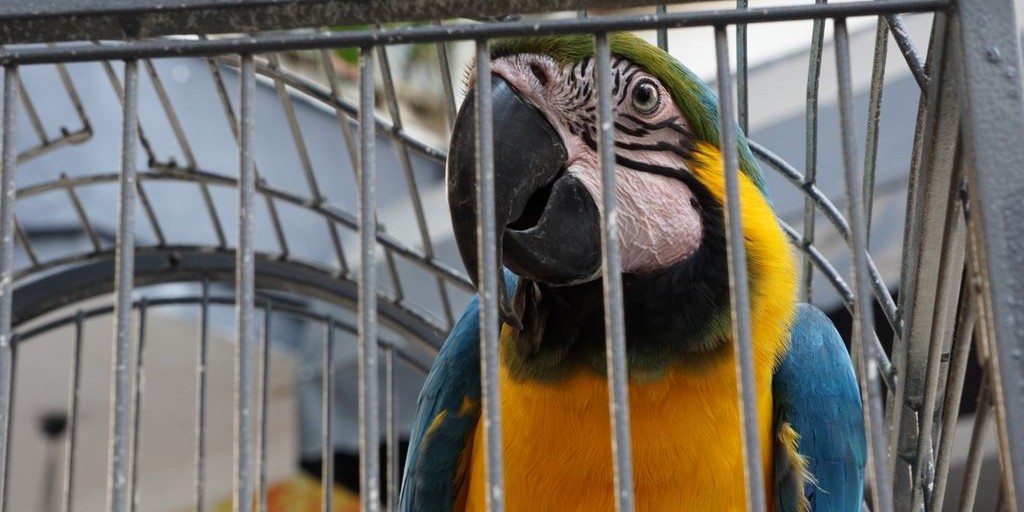
They arrive in boxes, in bags, tucked into balled-up socks and nestled in hair rollers. From birds and snakes to lizards, turtles, big cats, primates and pangolins, thousands of banned exotic animals are brought to Canada using ingenious methods to fool border officials, often under the direction of trafficking syndicates.
The goal? To feed the desires of collectors and hobbyists. To stop it, Canada is responding through a mix of laws.
According to Monica Biondo and Ricardo Calado in an Ecology and Evolution article, the commercial wildlife trade contributes to resource depletion and species decline. It is “a major economic sector valued at US$145–220 billion annually [and the] illegal wildlife trade remains a significant transnational crime, estimated at US$20 billion annually and threatening endangered species.”
Sheldon Jordan, co-founder of the Canadian Environmental Crime Research Network and special adviser for the Global Initiative to End Wildlife Crime, says in a Policy Options article that the total economic impact of worldwide environmental crime is $300 billion, “with $1-2 trillion in related costs to communities and ecosystem services worldwide.”
While Canada is a popular destination for illegal wildlife, poor enforcement worsens the problem: “A Canadian law bans the import of wildlife that was taken illegally in another country, but doesn’t require proof of origin at the border, rendering the law a paper tiger,” says Alex Megerle in Mongabay.
Clearly, Canada must do better, according to Dr. Peter Stoett, a professor of political science at Ontario Tech University. “We need a national strategy that responds to the myriad of biosecurity threats,” which include illegal fishing and forestry, mining and the wildlife trade, and must work to reverse those trends “with a national strategy that integrates all aspects of law and justice, international diplomacy [and] science,” says Stoett via email.
What animals are smuggled into Canada?
A 2016 CBC story tells of a woman who boated across the St. Lawrence River, landing near Cornwall, Ontario. She unloaded boxes containing “205 reptiles, among them Chinese striped turtles, African side neck turtles, South American red-footed tortoises, a serrated hinge-back tortoise, green iguanas and Jackson’s chameleons.” According to the story, smugglers will do everything from using false-bottom shipping containers to sending animals through regular mail. They’ll tuck turtles into their pants, use false jacket pockets for bird eggs, dye the coats of smaller exotic cats to make them look like domestic felines, stuff finches into hair rollers and even put live snakes in their socks.
Lawyer and professor Victoria Shroff, KC, author of Canadian Animal Law, tells the story of a man trying to cross into Ontario with 51 turtles taped to his legs, and a Calgary smuggler attempting to transport turtles in boxes labelled “children’s building blocks.”
Many animals suffer and die en route. In 2023, animal rights groups urged Canada to follow the U.S. in refusing to import Cambodian macaque monkeys for laboratory testing. Two years later, a long-tailed macaque – one of a shipment of 100 – died during a 45-hour trip to Montreal. According to Animal Law Digest Canada, the monkeys endured an extended stopover in Georgia, cramped quarters, little food and water, and temperatures up to 48 degrees Celsius.
Legislation
All levels of government can regulate wildlife. The provinces manage local wildlife, for instance in activities like fishing and bear and moose hunting, says Jordan in an interview. “Federal law comes in when [wildlife] crosses borders.”
The Convention on International Trade in Endangered Species (CITES) is an international agreement regulating trade in 41,000 animals and plant species. Administered by the United Nations Environment Programme (UNEP), it “ensure[s] this trade is not harmful for the survival of species,” according to the federal government. Canada has played a major role in CITES since its beginning, and works to ensure that CITES continues to support sustainable trade.
Three CITES appendices focus on threat level:
- Appendix I covers the most endangered species, such as sea turtles, gorillas and several types of orchids;
- Appendix II covers animals and plants that could become endangered without trade controls, like corals, alligators, and many species of birds and snakes;
- Appendix III applies where animals/plants are protected in at least one CITES-member country.
Canada’s Wild Animal and Plant Protection and Regulation of International and Interprovincial Trade Act (WAPPRIITA) implements CITES. It regulates the movement of protected species across international and provincial borders.
According to Stoett, Canada’s customs personnel are top-notch, but the volume of imports can be overwhelming. On the plus side, “Canada is well-respected internationally [and] its delegations to CITES are knowledgeable and constructive.”
Animals banned under CITES include great apes, many big cats, rhinos, and elephants (unless destined for specified research facilities or zoos). Others fall under provincial/municipal regulations, like primates, venomous snakes, constrictors, crocodiles, alligators and bears. Municipalities often have bylaws against owning exotic animals. For instance, Toronto’s municipal code bans primates, large rodents, wolves, tigers, large rodents, and large lizards and snakes.
“[S]ome federal laws that are criminal, like the Species at Risk Act, can override provincial protections if those protections aren’t strong enough,” says Jordan.
An issue with bringing in wildlife is the listing of what people can and cannot import. Angela Fernandez, director of the Animal Law Program at the University of Toronto, says via phone that “one way is to say, ‘okay, we’re going to list the animals that you can’t have, so for instance no tigers, no non-human primates.’ That’s one way to do it.” It might be better, “instead of a prohibited list, to have a positive list, which basically says, ‘these are the animals you can have.’”
In a telephone interview, Shroff says that “Canada should not be the weak link in the global fight against wildlife trafficking. We need stronger documentation requirements, better enforcement at the borders, and accountability for the businesses profiting from illegally sourced wildlife. These tools do exist, but we need the political will and prosecutions. It often comes down to enforcement when it comes to animal laws, and there’s a patchwork of different laws.”
What is wildlife crime?
According to the Financial Transactions and Reports Analysis Centre of Canada (FINTRAC), wildlife crime is “the trade of wild plant and animal species in contravention with both national and international laws and regulations. Wildlife crime can include commercial, import, export, and re-export activity and can occur at any stage in the supply chain.” While not all exotic animals are endangered, removing them from the wild can affect ecosystems.
To help identify and combat money laundering from these crimes, FINTRAC analyzed 200 suspicious transaction reports over an 11-year period. It found that front companies (from construction and logistics to transportation) enable and organize the collection of live animals and launder money through their operations. The transactions involve several players, from overseas collectors/breeders, money mules and agents to Canadian-based traders and sellers who use websites and social media to ply their trade.
Convicted smugglers may face a few months to years in jail and fines up to $50,000, sometimes running into millions of dollars based on the crime’s severity.
And “organized crime groups that deal in wildlife crime are often doing all sorts of other things,” adds Jordan. “Smugglers smuggle, it doesn’t matter, and traffickers traffic. The cruelty and the amount of mortality that happens with the illegal wildlife trade is sad.”
Finding questionable shipments of animals at airports, ports and border crossings can trigger further inspection by wildlife officials. On a larger scale, the federal government works closely with other countries. In 2025, Environment and Climate Change Canada, the department dealing with illegal wildlife importation, joined 133 other countries, the International Criminal Police Organization (INTERPOL) and the World Customs Organization on Operation Thunder. The initiative led to charges against 1,100 suspects and the seizure of everything from 215 kg of elephant ivory to 10 big cats, 6,000 birds, more than 2,000 tortoises and 208 primates.
The Canadian operation “uncovered a number of violations involving products made from plant and animal species protected under [CITES],” according to a news release. Worldwide, Operation Thunder seized 30,000 live animals.
Poverty drives the illegal trade
Clearly, “the main driver of the illegal wildlife trade is poverty,” says Stoett, but what needs to be avoided is “the criminalization of poverty — it is the distributors that need to be punished, not the villagers who get embroiled in the trade. Similarly, a heavily militarized response won’t be effective in the long run — it just opens more doors for corruption, and lacks legitimacy in the eyes of Indigenous and other folks who are the real protectors of biodiversity.”
The federal government must do more, says Sheldon Jordan in Policy Options. “Federal and provincial environment ministers co-ordinate on biodiversity and pollution, but never on green crime despite its damage to ecosystems. Justice and public safety ministers meet frequently, but not on this issue, even with its economic and social costs.” Fines vary between provinces and federally. “In a quirk of Canadian federalism, responsibility for terrestrial wildlife falls under the provinces while criminal law is a federal jurisdiction. Poach every bear, moose or deer and one may get a provincial fine but can never face criminal charges or penitentiary time.”
According to Stoett, ways to improve the situation include:
- Continued support for INTERPOL;
- Increased funding for training customs agents and improving technology for detection at borders;
- Increased penalties for environmental criminals;
- Adding environmental crimes as a protocol to UNTOC (UN Convention Against Transnational Organized Crime).
Maneesha Deckha, professor and director of the University of Victoria Faculty of Law’s Animals & Society Research Initiative, says via email that Canada “can help reverse species decline and resource depletion by prohibiting trade in wildlife (this includes what Canada exports as well as what it permits as imports) and by also thinking in a more future-oriented and systemic way about what other mainstream practices contribute to biodiversity loss and species decline and animal devastation.”
Deckha notes that animal oppression and human oppression are tightly linked. “If we want to respect human rights the law needs to start respecting animal rights and adopt the principle embedded in many Indigenous legal orders in Canada that we are all valuable beings who are due respect.”
Shroff adds that a global effort is necessary because the trade “fuels all kinds of different crimes … and people wouldn’t even understand the connection between hippos and cocaine until they dig a little further, but it’s there.”
Says Jordan: “We’ve made progress in terms of bringing awareness to the issues of environmental crime. Where we have not made progress is that the people responsible for environmental policy and regulations look at it as a crime problem, and the people who are responsible for justice and crime see it as an environmental problem … globally, only about a third of environmental laws, and this is mainly to do with wildlife, meet the threshold of serious crime under the UN Convention.”
Famed conservationist Rachel Carson, in her book Silent Spring, lamented that humanity’s power to impact nature had “achieved such magnitude that it endangers the whole earth and its life.” While the illegal wildlife trade speeds up the crisis, a greater cooperative effort by governments worldwide may help to manage it.
Looking for more information?
Looking for articles like this one to be delivered right to your inbox? SUBSCRIBE NOW!
DISCLAIMER The information in this article was correct at time of publishing. The law may have changed since then. The views expressed in this article are those of the author and do not necessarily reflect the views of LawNow or the Centre for Public Legal Education Alberta.
 About John Cooper