Debt bondage happens when overseas recruiters charge workers high fees to access jobs in Canada. Advocates say major changes to law and policy are needed to prevent it.
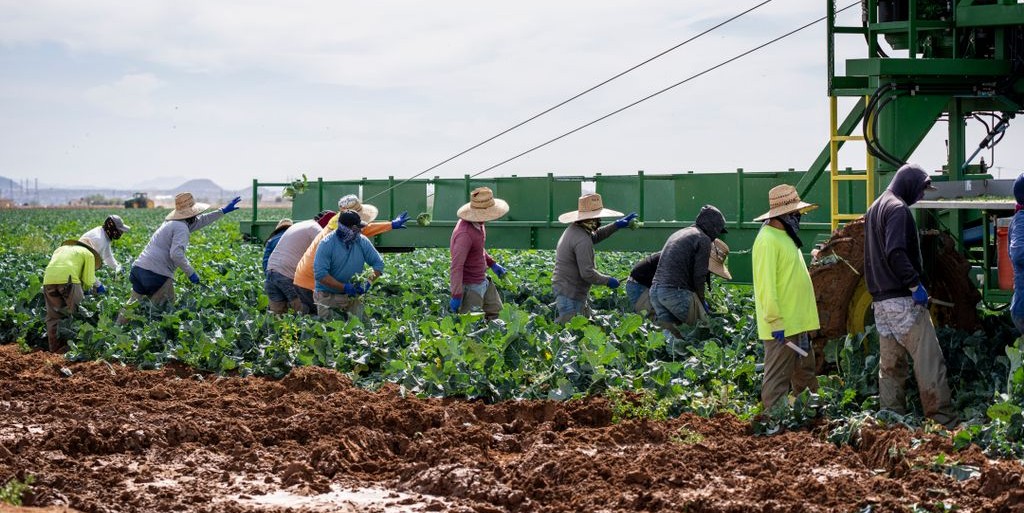
Southeast Asian and eastern European women, hired as domestics but forced into jobs as sex workers. Jamaican, Guatemalan and Mexican workers toiling in agriculture. Vietnamese women working in the nail-care industry. Filipino men framing houses in the construction industry.
Many of them may be workers charged outrageous fees for the promise of well-paying jobs. They may take out extremely high loans to get here and face exorbitant fees for housing, food, travel and passports, essentially getting trapped in a hard-to-escape cycle of work and debt.
From agriculture and food processing to tourism, construction and domestic work, debt bondage is a growing concern in Canada, fueled by international poverty and unscrupulous agents. Government programs like the Temporary Foreign Worker Program (TFWP) can be both a blessing and a curse.
The Temporary Foreign Worker Program
The TFWP gives Canadian employers access to international workers to manage severe work shortages. On one hand, the TFWP supports cornerstones of the Canadian economy and offers jobs in industries like construction and agriculture. But it can create conditions of servitude, since international workers may have to pay “agents” in their home countries to access jobs. This is a form of debt bondage, defined by Calgary-based Action Coalition on Human Trafficking (ACT) as a situation “when someone is forced to pay off a loan by working for little or no payment. Debt bondage is one of the most common methods of exploiting victims of human trafficking.”
The TFWP requires an employer to get a Labour Market Impact Assessment (LMIA) before hiring temporary foreign workers. The LMIA must show that employees will have a positive or neutral effect on the economy and that the employer has attempted to fill positions with Canadian workers. Workers receive a non-negotiable, employer-specific work permit, which ties them to a job at a particular location.
The challenges? International workers may pay brokers illegal recruitment fees (often by borrowing money) to access these jobs, sometimes in the tens of thousands of dollars. According to an article in The Conversation, workers “come from more than 80 different source countries. Of that number, 110,000 are low wage,” in jobs often marked by “unpaid wages, limited access to timely health care, unsafe working conditions, overcrowded accommodations, abusive working conditions, questionable payroll deductions and non-payment of accrued overtime.” According to the federal government, in 2025, the TFWP issued more than 162,000 permits, with almost half of those involving jobs in agriculture and farming. Psychological and physical abuse and long work hours are additional hazards, according to ACT.
Contemporary slavery?
According to a 2024 CBC story, a report by Tomoya Obokata, the United Nations’ special rapporteur on contemporary forms of slavery, called Canada’s TFWP “a breeding ground for contemporary forms of slavery” with “workers being underpaid and going without protective equipment… employers confiscating documents, arbitrarily cutting working hours and preventing workers from seeking health care,” as well as creating conditions for sexual harassment and abuse. However, then-Immigration Minister Marc Miller “objected to the use of the phrase ‘contemporary slavery’ in reference to the temporary foreign worker program.”
Amanda Aziz is a staff lawyer at BC-based Migrant Workers Centre, a non-profit created to “promote and advance access to justice for migrant workers by providing legal support, system navigation, advocacy, research, public education and engaging in law and policy reform initiatives.” In a telephone interview, Aziz says Obokata’s statement was “very welcomed by my organization and many others working with migrant workers. It is very accurate, and unfortunately nothing really has improved since that report” came out. The International Labour Organization and other groups say 50 million people around the world live in modern slavery, more than half of them in debt bondage. Aziz says it is reasonable to estimate the number of workers caught in debt bondage in Canada in the “tens of thousands.”
Canadian laws targeting debt bondage include section 279 of the Criminal Code (Trafficking in Persons and Forced Labour) and Bill S-211 (Fighting Against Forced Labour and Child Labour in Supply Chains Act). Bill C-16, the Protecting Victims Act, received Royal Assent in June 2026 and aims to update and “strengthen protections for victims of exploitation, gender-based violence and coercion.” Ontario created Bill 41 (the Protection from Coerced Debts Incurred in Relation to Human Trafficking Act) to prevent credit reporting agencies from including coerced debts in consumer reports and ban the collection of debts forced upon human trafficking survivors. Ontario, Saskatchewan and Alberta all have Trafficking Acts providing legal remedies and civil protection for trafficking survivors. British Columbia, Alberta, Saskatchewan, Manitoba, and Ontario all forbid the charging of fees to secure jobs.
“The problem is, the federal government… seems to be in denial with respect to some of the core causes of a lot of the abuse and exploitation in these temporary programs,” says Aziz. Limiting workers to one employer and a non-negotiable work permit with no flexibility creates “an incredible power imbalance more so than with Canadians or permanent resident workers. The fact that it’s temporary and totally reliant on [an] employer … you are going to see a very awful system, situations of abuse and exploitation, just by virtue of the way we’ve set up this system.”
Huge debts and reduced opportunities
A federal government study found that being “far from home, without their familiar social system and their potential social supports, was seen as an important factor in individuals’ vulnerability to coercion and exploitation… Economically, traffickers often saddle their victims with huge debts leading to dire consequences in cases of non-payment and/or make promises of future prosperity. For international victims, threats of being exposed to immigration authorities are another form of control.”
Aziz says that while the federal government is attempting to improve the situation, it is also making “a mad rush to reduce the number of temporary residents,” wrongly blaming them for negatively impacting housing and social services. This shifts the focus away from positive measures like “proactive [workplace] inspections and enforcement.” According to Aziz, trying to reduce the number of temporary residents has just made the situation worse. For those who are legitimately working in Canada and trying to find a path to permanent residence, “we’ve pulled the rug out from under so many of these workers.”
The struggle for steady work has created a predatory industry full of “unscrupulous representatives and agents who are getting rich off fraudulently promising workers that they can help them get a new job if they just pay [and telling workers] they’ve got ‘connections’ with employers. It has created this situation of desperation [with] workers now having a much harder time renewing their temporary residency and then turning to these really awful agents and representatives who are taking advantage of the situation,” says Aziz. Promises of jobs – both real and fake – drive workers to pay up to $70,000 for a chance to work in Canada.
Aura Freedom International is “a grassroots organization working in Canada and internationally to end violence against women and human trafficking through advocacy and education.” In a phone interview, founder and CEO Marissa Kokkoros calls debt bondage a form of coercion, “because the trafficker will say, ‘you owe me 10 grand for your travel, your housing, your recruitment fees, your food,’ and that could be for labour trafficking or sex trafficking. And they say, ‘you must work until your debt’s paid off,’ and then they’re going to add excessive, ridiculous fees on top of it.”
According to ACT, “traffickers may tell victims that they have incurred debt due to expenses associated with transportation, housing, food, and documents such as work permits and visas. Often, traffickers will pile more on top of the initial debt, citing costs such as interest on the initial debt, ongoing costs of food and housing, and additional necessities like medication.” This can include coercive debt like lines of credit, personal loans, and credit cards.
Complaints stuck in red tape
For international workers, getting out of debt bondage involves:
- Ensuring their own physical safety;
- Using specialized helplines to contact organizations that assist with shelter and emergency help;
- Keeping notes and records of names of exploiters, living/working conditions, and coercive financial obligations; and
- Reporting the crime and using the available resources to nullify coerced debts.
If mistreated workers want to file a complaint, those grievances are often stuck in a complicated system of overburdened investigators and overbooked tribunals. In general, there is a six-month limitation period to make a complaint, with up to two years for temporary farm workers.
In BC, human rights complaints are taking longer to get to a tribunal, there are often language barriers, and “by the time you get an investigator [to look into the complaint], the worker may already be back in their country,” says Aziz. “They could continue with a complaint but often feel very unmotivated, so we’ll have to abandon their claim.”
Million-dollar question
How to rid the world of debt bondage?
“That is the million-dollar question,” says Aziz. “In our office we often see these schemes getting more sophisticated and difficult. Players in a worker’s own country start the recruitment scheme and collect tens of thousands of dollars, and then they have a representative in Canada who does the immigration work.” How do authorities enforce the rules, and get to those overseas recruiters who receive the money? “Recruitment fees are illegal across the country. No one is permitted to charge a worker a fee to get placed in a job [but] it can take years to identify recruiters, and longer for that person to finally be arrested or investigated.”
A better future includes more effective enforcement. “If we get rid of the structures that create incentives to sell jobs to workers by not having our system focused on employer-specific work, I think that could go a long way,” says Aziz.
Prevention involves “empowering and building up our communities to resist and to not have any need for some trafficker who’s going to promise [workers] everything they’ve ever wanted,” adds Kokkoros. Aura Freedom has provided submissions to government studies and “brought survivors to the table,” but they note that the issue “is so much deeper, and we really have to go upstream because legislative efforts are just band-aids that happen after the exploitation” has already happened. The real focus must be education, advocacy, and prevention, says Kokkoros.
Long-term, access to justice demands faster investigations and a commitment by all – from employers and law enforcement to the tribunal system and politicians – to make the system more transparent, rigorous, and fairer to workers.
Looking for more information?
Looking for articles like this one to be delivered right to your inbox? SUBSCRIBE NOW!
DISCLAIMER The information in this article was correct at time of publishing. The law may have changed since then. The views expressed in this article are those of the author and do not necessarily reflect the views of LawNow or the Centre for Public Legal Education Alberta.
 About John Cooper