Important Update: Please see the article by Juliana Ho about the Supreme Court of Canada ruling in R. v Fearon. The Supreme Court of Canada decided that the police search of Mr. Fearon's cellphone did breach his Charter s. 8 right to be free of unreasonable search and seizure but decided that … [Read more...]
Organizations Need to Build their CASLs: Information for Non-Profits and Registered Charities

What is CASL? CASL stands for Canada's Anti-Spam legislation. This anagram is the unofficial name for a new law that came into force across Canada on July 1, 2014. Because it is a federal law, it will apply to not-for-profit organizations and, with some limited exceptions, to registered charities … [Read more...]
Porter Airlines: A case study in CASL

On June 29, 2015 the Canadian Radio and Television Commission (CRTC) announced that Porter Airlines Inc. had agreed to pay $150,000 as part of an undertaking in respect of alleged violations of Canada's Anti-Spam Law (CASL).CASL requires consent to send commercial electronic messages to an … [Read more...]
Some Observations about Evidence in the Electronic Age

Case Commented On: Kon Construction v Terranova Development, 2015 ABCA 249This Court of Appeal decision concerns a dispute over the performance of a contract. Terranova retained Kon Construction to grade lands for residential development. The work was to be done in 2005 but was delayed into 2006 … [Read more...]
The Supreme Court of Canada: A History
The leading role of the Supreme Court of Canada is no longer in dispute, but there was a time when it had to struggle to establish its authority.The history of the Court began with section 101 of the Constitution Act, 1867, which allowed Parliament to establish a “General Court of Appeal for … [Read more...]
Democratic Governance: The Constitution and Canada’s Branches of Government
Canada has a constitutionally recognized federal government and constitutionally recognized provincial governments.Canada is a “constitutional monarchy,” which is a form of government where monarchs act as the political heads of state but their powers are kept within the boundaries of that … [Read more...]
Judicial Review is Different from Judicial Activism
Since the enactment of the Canadian Charter of Rights and Freedoms in 1982, there has been much discussion about the proper role of judges and courts in our democratic system. Commentators have noted, and many critics have complained, that decisions made and laws passed by our democratically elected … [Read more...]
The Nadon Reference: A Unique Challenge
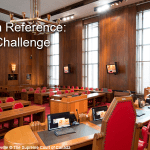
The judgment of the Supreme Court of Canada in the “Nadon Reference,” more elegantly known as Reference re Supreme Court Act, ss. 5 and 6, [2014] 1 SCR 433 is one of the more controversial decisions of the Court in the fairly long list of defeats for the federal government in recent years. Can … [Read more...]
Top Courts in the U.S. and Canada: A Comparison
Knowledge of Canada or the United States is the best way to gain insight into the other North American country. Nations can be understood only in comparative perspective. And the more similar the units being compared, the more possible it should be to isolate the factors responsible for … [Read more...]
The Indian Act: Can it be abolished?

Two simple observations are made so often about the Indian Act as to amount to clichés: That the 1876 Act is still with us, and that it should be “abolished.” The first of these is technically false; the 1876 Act was repealed in 1951, and replaced with the Act we have today, though it has been … [Read more...]